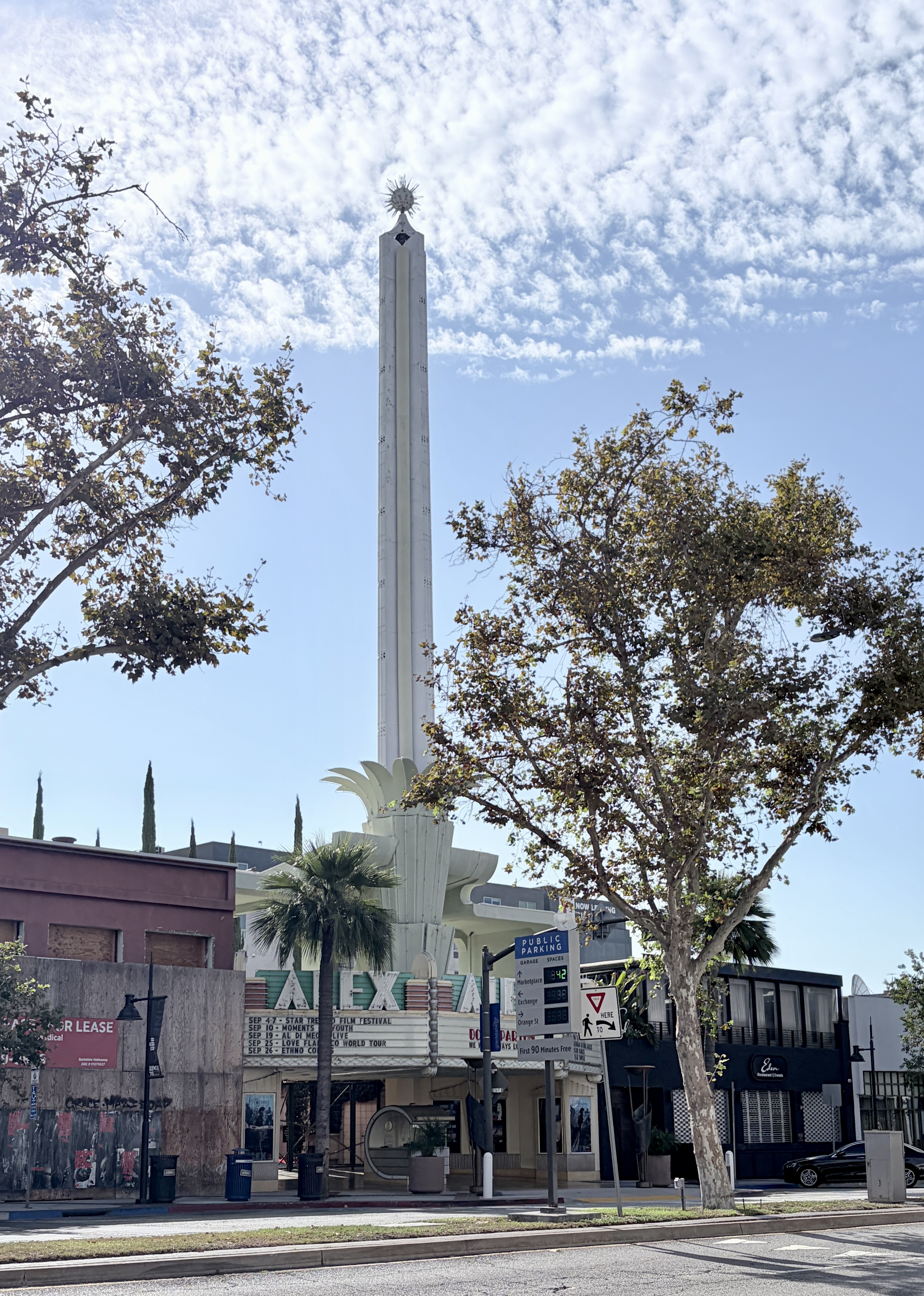
Hollywood unions and nine members of Congress rallied in Glendale on Tuesday, Oct. 6, for a bill creating a federal film tax credit.
The event at the Alex Theatre, led by Rep. Laura Friedman, D-Glendale, pushed the bipartisan Motion Picture, Television and Entertainment Revitalization Act (MPTERA). The bill would offer a 20% credit on labor costs for qualifying productions that shoot at least 75% of their principal photography days in the United States, according to Spectrum News.
More than 100,000 production jobs have vanished since the industry's peak in October 2022, a decline of roughly 36%, according to Friedman's office. The industry supports more than 2 million jobs and $202 billion in wages nationally. For Los Angeles, where those jobs are concentrated, the losses hit close to home.
"When a production leaves this country, the stars still work. The crew is who gets left behind," Friedman told the crowd. "65 countries offer incentives we don't match, and no single state can outbid a foreign government on its own."
Sen. Adam Schiff, D-California, told attendees he has worked on a federal credit for nearly 25 years and that Congress has never had such broad bipartisan support for one. The bill is co-led in the House by Reps. Nathaniel Moran, R-Texas, Linda Sánchez, D-Whittier, and Brian Jack, R-Georgia. In the Senate, Schiff and Sen. Tim Scott, R-South Carolina, are co-sponsors.
Representatives of SAG-AFTRA, the Writers Guild of America (WGA), the Directors Guild of America (DGA), IATSE (the International Alliance of Theatrical Stage Employees), the Teamsters and the Laborers' International Union of North America (LiUNA) attended. Producers Guild of America Co-President Mike Farah also joined.
Duncan Crabtree-Ireland, SAG-AFTRA's national executive director, called the bill a direct investment in American production workers.
Feature films, TV pilots and TV seasons costing more than $1 million would qualify. The credit covers crew labor and above-the-line salaries for actors and writers, according to the Los Angeles Times, which reported the bill's Sept. 24 introduction.
Bonus credits could push the incentive to 30% for independent productions or projects filming at least 30% of their days in a rural qualified opportunity zone or a federally declared disaster area. L.A. County's disaster-zone designation could qualify local shoots for that bonus.
A study commissioned by the Motion Picture Association estimated the credit could boost U.S. production spending by $125 billion and add more than 143,000 jobs by 2035.
Pressure is building from the studio side, too. At a Skydance press event on the Paramount lot on Oct. 6, co-CEO David Ellison said Paramount's domestic production level sits at about 5%, according to The Wrap. Ellison said the company had been in Washington lobbying senators on both sides of the aisle to pass the credit by Dec. 11. Skydance pledged to increase U.S. production spending by $1.5 billion over five years as part of its merger settlement with state attorneys general.
A union-commissioned study by EY found that the U.S. share of major-studio spending on TV episodes fell from 94% to 64% between 1999 and 2024. Film spending dropped from 74% to 42% over the same period, according to the Los Angeles Times.
The House is in recess until after the Nov. 3 midterm elections. Supporters hope to pass the bill before the end of the year.