Mayor Karen Bass directed the Los Angeles Police Department to stop issuing criminal citations to street vendors after officers erroneously cited vendors near MacArthur Park.
The directive came after Bass drew backlash for remarks at a Sherman Oaks Homeowners Association debate on Wednesday, Aug. 19. "I do not believe that you should have a food vendor in front of a restaurant, period," Bass said, adding that their presence near restaurants discourages customers "just like you shouldn't have encampments in front of restaurants or in front of schools."
The LAPD's use of the city's anti-camping law against MacArthur Park vendors was first reported by LA Public Press on Aug. 26. Advocates warned the citations could expose immigrant workers to detention or deportation.
Bass spokesperson Paige Sterling confirmed the directive on Aug. 27, according to the Los Angeles Times. Sterling said Bass's office asked the LAPD to ensure the citations were not happening citywide and to remove any charges issued in error. The mayor's office called street vending a core part of the city's food culture and a livelihood for thousands of workers.
The citations sharpened a policy divide heading into the Nov. 3 mayoral runoff between Bass and Councilmember Nithya Raman. Bass placed first in the June 2 primary with 34% of the vote. Raman finished second with 29%.
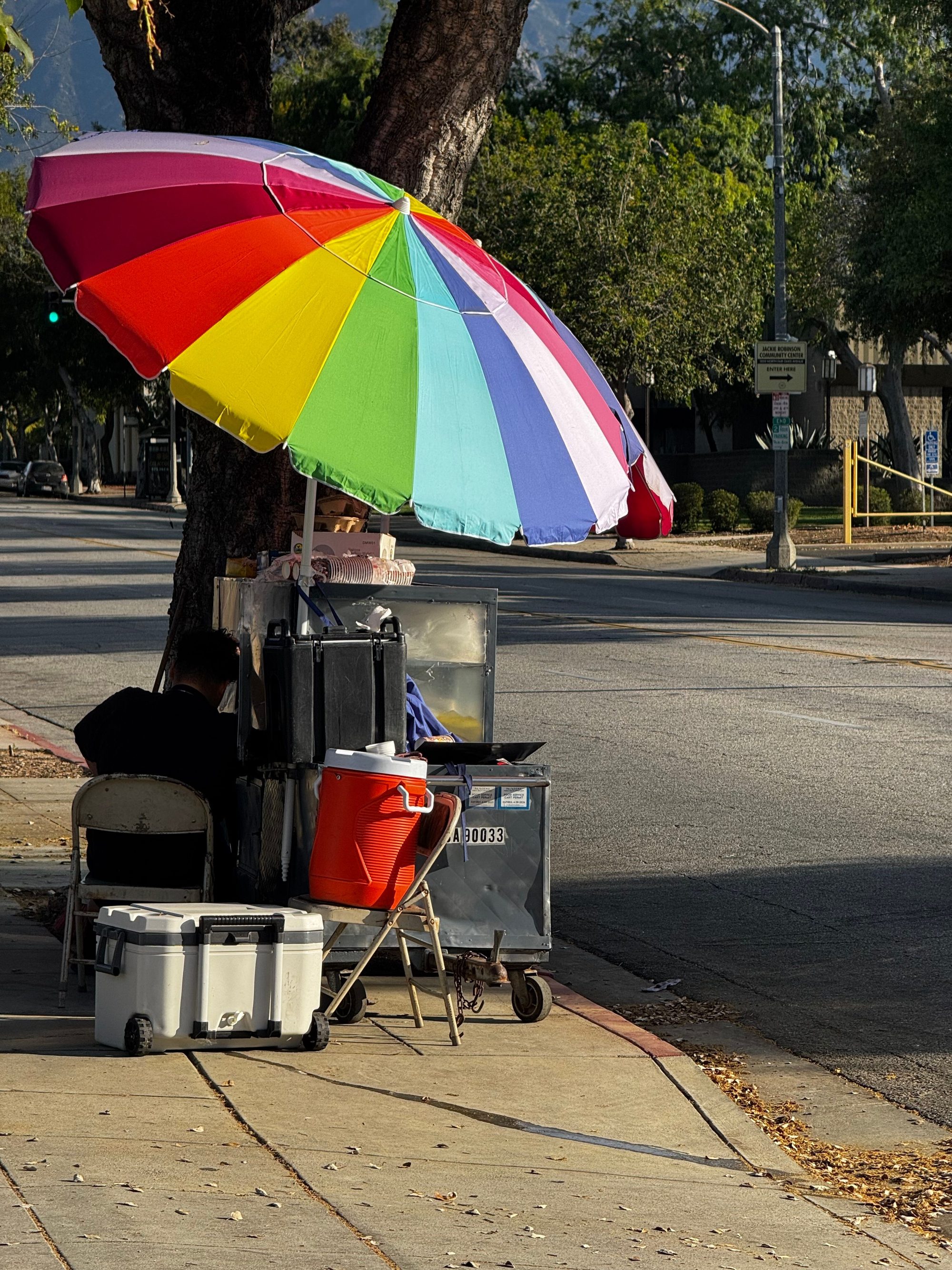
An estimated 50,000 street vendors operate across Los Angeles. Only 53 hold food-sales permits, according to a California Restaurant Association email first reported by L.A. Taco and cited in a LAist explainer published Sept. 10. The gap exists largely because the city's permit requirements mirror restaurant-grade standards, including large refrigeration units and multi-basin sinks, that do not fit most vendor setups of flat-top griddles, folding tables and pop-up tents.
California's SB 946, passed in 2018, decriminalized street vending statewide. Cities cannot criminally cite vendors or ban them from specific zones but can still enforce health and safety rules such as sidewalk clearance and Americans with Disabilities Act (ADA) access.
Raman unveiled a nine-point street vendor plan in late August at the Brothers Cousins Tacos stand on Sawtelle Boulevard. The plan proposes creating an Immigrant Economic Opportunity Hub offering permitting support, microloans and legal help. It also calls for designated vendor districts with shared infrastructure such as sinks, power, lighting and restrooms.
A central proposal would extend a state permit category currently used by farmers market vendors, who share communal equipment like a three-compartment sink, to street vendors. That change would let operators qualify without their own restaurant-grade setup.
Raman, asked at the Aug. 19 debate whether she would allow food stands in front of brick-and-mortar restaurants, said she believed vendors and restaurants could share streets without conflict. She did not specify whether that would be enforced through distance requirements, ticketing or other means.
Anthony D'Eugenio, owner of Big Dix's Hot Dogs, a licensed food cart in West Hollywood, told the California Post he pays $750 annually for his permit on top of costs for a business license, insurance, tax permits and a commissary. He has operated his cart for five years.
In 2024, the Los Angeles City Council voted to drop the annual street vending permit fee from $541 to $27.51. Even at the lower price, the permit count remains far below the vendor population.
No City Council vote on further vending reform is currently scheduled. The mayoral runoff is Tuesday, Nov. 3.