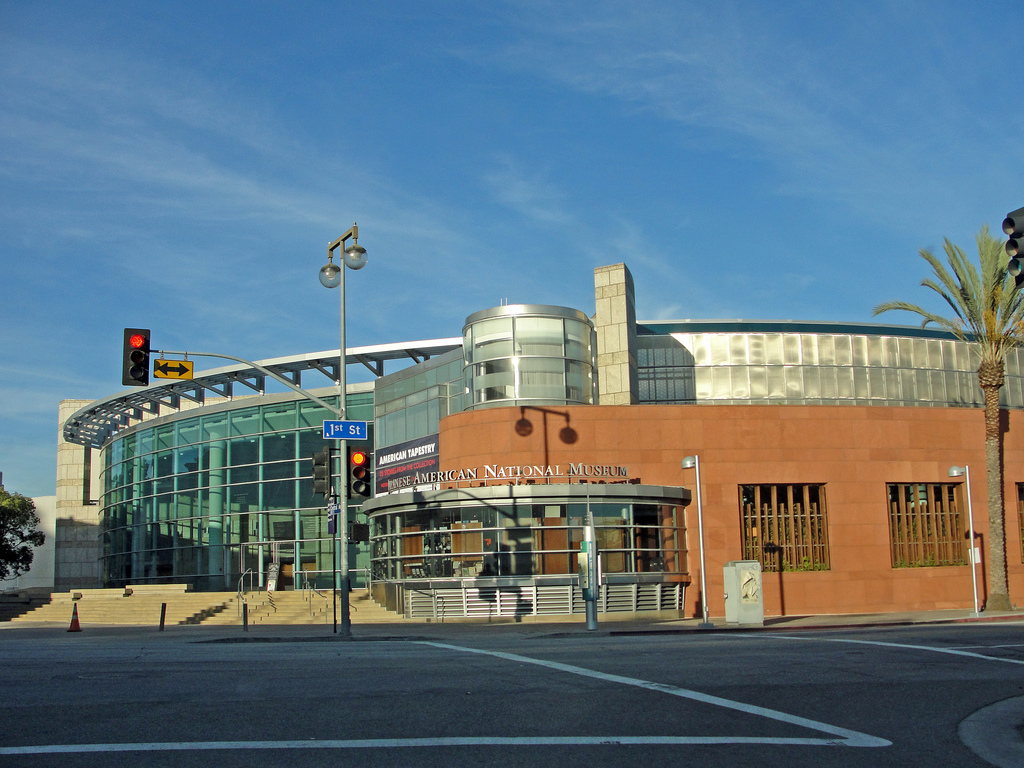
Four documentaries about the lasting wounds of Japanese American incarceration during World War II will screen at the Japanese American National Museum's Democracy Center in Little Tokyo on Sept. 26.
The daylong program, titled "When You're Smiling: Screenings on Intergenerational Impact of Incarceration," runs from 10 a.m. to 4 p.m. at 100 N. Central Ave. Emmy Award-winning journalist Wendy Tokuda, the first Asian American woman to anchor primetime television news in the Bay Area, will host and moderate. Tokuda is the daughter of Japanese Americans who were incarcerated during the war, according to KRON4.
The event is produced by filmmaker Janice D. Tanaka, who was incarcerated at Manzanar as a baby, the Rafu Shimpo reported. Tanaka is considered a pioneer in experimental video art. Her work draws on the experiences of her Nisei, or second-generation, parents and has received grants from the American Film Institute, the National Endowment for the Arts and the Rockefeller Foundation.
The four films span personal and communal grief. Tanaka's "Who's Going to Pay for These Donuts, Anyway?" (1992, 58 minutes) recounts her father's institutionalization after he wrote letters to the president questioning the constitutionality of incarceration. Her shorter piece, "Memories from the Department of Amnesia" (1991, 12 minutes), is an elegy to her mother. "Children of the Camps" (1999, 57 minutes), produced by Dr. Satsuki Ina and directed by Stephen Holsapple, documents a therapeutic gathering of Nisei who were incarcerated as children. The title film, "When You're Smiling" (1991, one hour), remembers 31 Sansei, or third-generation, Japanese Americans who died by suicide in Los Angeles in 1970. It examines the pressures, silence and "model minority" expectations that shaped their lives.
Dr. Ina was born at the Tule Lake Segregation Center in 1944. She developed a therapeutic workshop for former child internees that she led for more than a decade. On the PBS website for "Children of the Camps," she said: "Our experience was unique, but it's an example of the broader experience of racism, how it permeates lives, and how we each attempt to survive it."
A panel discussion will bring the three filmmakers together for the first time. Community leaders Ron Wakabayashi and Peter Gee, co-executive director of the Little Tokyo Service Center, will join them. Wakabayashi first reported on the Sansei deaths in 1970 and investigated the circumstances surrounding them. Gee will share information about community support resources.
The program is sponsored by the George and Sakaye Aratani Community Advancement Research Endowment (CARE) Award, the UCLA Asian American Studies Center and Keiro. Registered attendees will receive streaming access to all four films in advance so they can watch before the Sept. 26 program.
The JANM Pavilion is closed for renovation. The program takes place at the museum's Democracy Center, a separate space at the same address.
Tickets are $10 general admission, $5 for seniors and students and free for JANM members. They are available at janm.org/events.
If you are having suicidal thoughts, call or text 988 to reach the 988 Suicide & Crisis Lifeline.