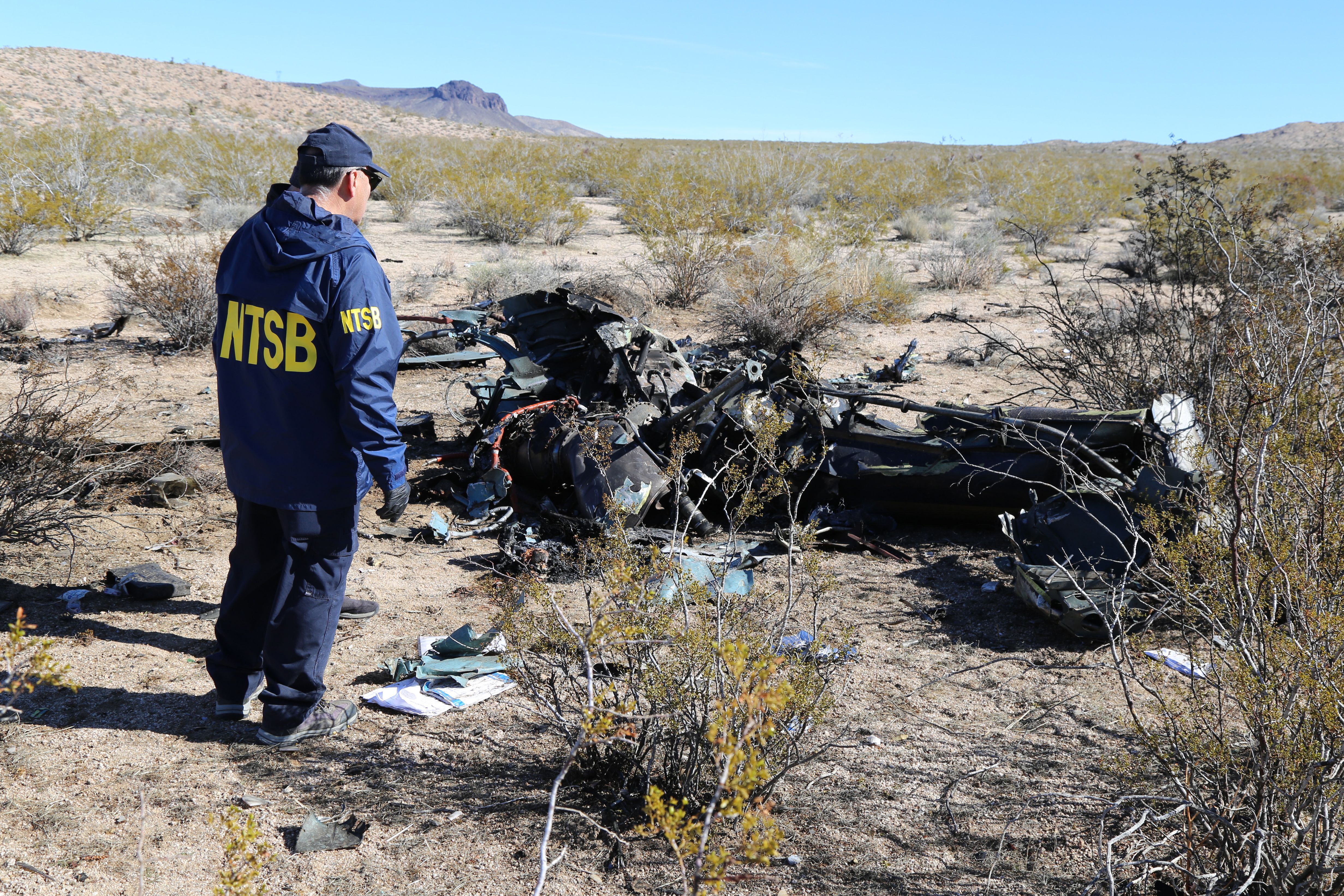
The on-board video from NBC4's NewsChopper4 is likely the most important evidence in the investigation of the fatal Chatsworth helicopter crash, the National Transportation Safety Board said Wednesday, Sept. 16.
NTSB investigator-in-charge Fabian Salazar told reporters at a briefing near the crash site that the live broadcast footage captured sounds consistent with the engine changing speed and tones that are likely pilot warning advisories.
"The video that was actually taken while the reporter was doing live coverage, that video is probably the most important evidence that we have discovered so far," Salazar said, according to the New York Post.
The Eurocopter AS 350 B2 helicopter is not believed to have carried a flight data recorder. That makes the broadcast video the primary tool for reconstructing what went wrong.
Salazar said the NTSB plans to obtain a pristine copy of the recording and send it to the agency's recorder lab for a sound spectrum analysis, NBC4 reported.
The crash killed three people: NBC4/Telemundo 52 aerial reporter Eliana Moreno, pilot George Marciniw and 29-year-old bystander Edy Gutierrez Mejia, identified Wednesday, Sept. 16, by the Los Angeles County Medical Examiner, according to ABC7. Both Moreno and Marciniw worked for Angel City Air, the company that operated the helicopter for NBC4 and Telemundo 52.
The helicopter went down at about 6:57 p.m. Tuesday, Sept. 15, near 9151 Mason Ave., between two commercial buildings, according to the Los Angeles Fire Department. Sixty-seven LAFD firefighters responded. Four cars and two storage containers caught fire.
The crew had been covering a separate fatal collision in which a Ford SUV drove the wrong way on De Soto Avenue and struck a Metro Line 166 bus, killing two passengers. As we reported Wednesday, LAPD arrested Bailee Lynn Rios, 36, of Simi Valley on suspicion of murder in connection with that collision.
Veteran news helicopter pilot Zoey Tur, who has flown the same aircraft type, told the Los Angeles Times the audio suggests a sudden loss of engine power. Tur said the post-crash fire indicated fuel remained on board, suggesting the engine did not shut down because of fuel exhaustion.
The helicopter had been hovering at low altitude over the bus crash scene. Former Marine Corps helicopter pilot Jack Cress, an accident investigation instructor at USC's Aviation Safety and Security Program, told the Times that position put the pilot in the worst part of the "height-velocity curve," a dangerous combination of low altitude and low forward speed that leaves almost no room to recover from an engine failure.
Angel City Air, a division of Welk Aviation, said it is cooperating fully with the NTSB and the Federal Aviation Administration and would not speculate on the cause.
Investigators will also examine maintenance logbooks, surveillance footage from nearby buildings, weather data and the pilot's training records. Angel City Air will turn over maintenance records, according to KTLA.
The NTSB asked anyone with video of the crash to contact [email protected]. A preliminary report is expected within about 30 days, with a final report identifying probable cause possible up to 18 months out.